

I tend to think major technologies pass through society in 10 years or so.
For example, compare 1997 and 2007 internet use.

There was ~65 million North Americans on the internet in 1997. By 2007, it was 285 million. Almost the entire population.
The iPhone launched in 2007. By 2017, everyone was getting fed up with the latest releases.
The pioneering AI paper (the research that led to AI as we know it today) was published in 2017. By next year, there could be as many as 2,500 AI labs (there are currently 2,100).
ChatGPT launched in November 2022. By 2032, I’m betting no-one will care about which AI model they use, the number of tokens they consume, how they connect to an AI, privacy, connectors or anything to do with training data.
Life after AI
Right now, I’m preparing for a new episode of The Business Stack of the Future – our new series brought to you by Stripe, featuring on The Australian Business Podcast (the show is available on Spotify and Apple).
My research has taken me to all kinds of fascinating endpoints.
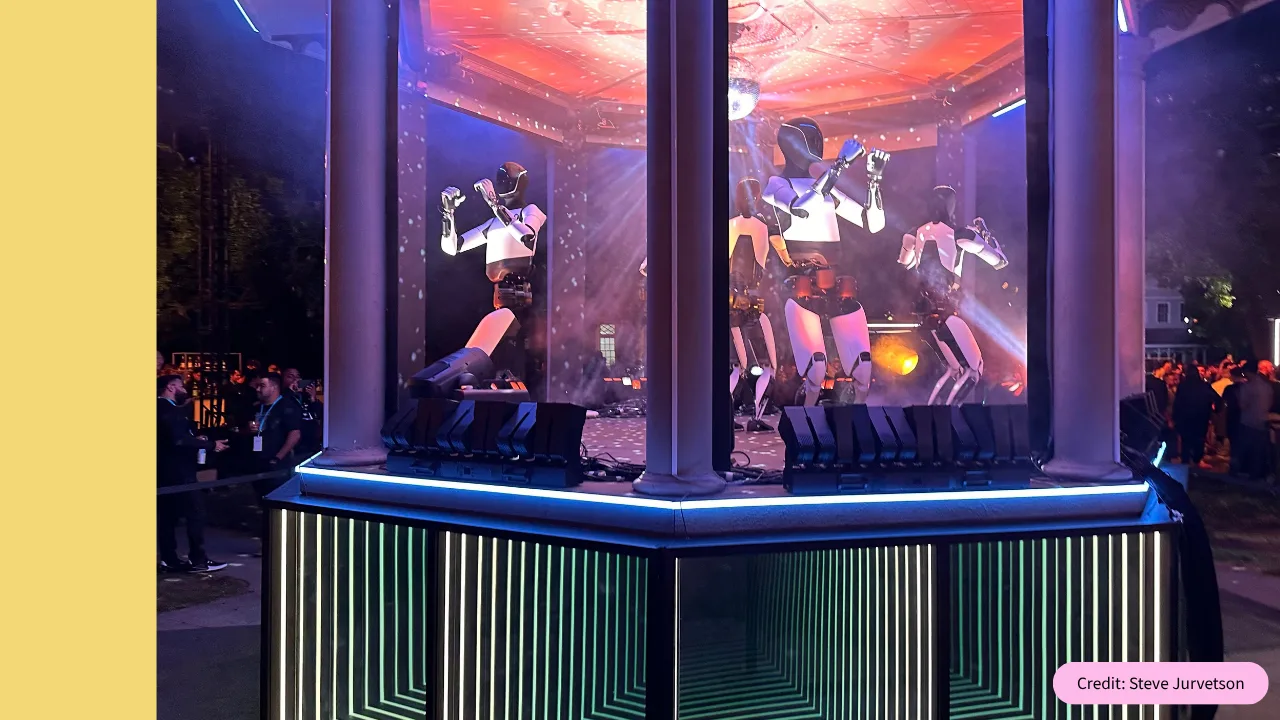
I’ve already written to you about robots and the timeline towards 2035.
We also discovered how we’ll soon be getting AI agents to make purchases. Most businesses already let AI negotiate with customers.
We also shared where AI is having the most profound impact on people’s work.
But what’s most interesting to me is who will win and who will lose from this disruption, and what it means for us as investors who support long-term innovation.
Fortunately, we have real-time case studies.
Right now the amazing destruction to valuations of software companies, as shown below, gives us some insight into the future.

The chart above, from the new Rask platform, shows the share prices of Intuit Inc (NASDAQ: INTU), which is the owner of Mailchimp, Quickbooks and TurboTax; Xero Ltd (ASX: XRO), the Kiwi-born accounting software company; and Adobe Inc (NASDAQ: ADBE), the world’s number-one creative design company.
The stock prices of Salesforce (NYSE: CRM), Figma (NYSE: FIG), and many others, look similar.
Personally, I’ve been whacked by this.
Pro Medicus Ltd (ASX: PME), a world leader in medical imaging; WiseTech Global (ASX: WTC), a leader in logistics software, and the Betashares Australian Technology ETF (ASX: ATEC) have been beaten down.
The question is: why?
To some, it might seem obvious why these companies have fallen: AI can build accounting software or create a video.
“Drag and drop a bank statement into Claude. Boom! That’s a budget.”
[Never mind it’s almost certainly 25% wrong… pfft, details.]
Clearly, some of that thinking is wrong.
Some may be right.
And some ideas will just be early (i.e. AI disrupts XYZ software company, but not until 2033).
I believe it takes a deeper understanding of innovation to get a clearer picture…
Room for more great
Regardless of whether you’re thinking about technology, designing a building, the future of journalism, baking bread, investing in stocks or building a house, there’s always room for more great.
Meaning, while we may have changed from walking to riding horses, to horse and cart, to steam engines, to automobiles, to electric vehicles – the great things within those eras have risen to the top and created wonderful value for their customers, for their shareholders and for humanity as a whole.
Elon Musk isn’t the first person to do cars, yet he’s the richest person on earth.
Henry Ford figured out how to do car making best in his era. Who knows who will be next.
But what we do know right now is Musk’s vision for Tesla (and soon, SpaceX) has already been the greatest thing to ever happen to humanity’s ability to find sustainable, low-cost transportation.
He is the greatest innovator and value creator today, hence why he is also the (financially) wealthiest. And that’s the way it should be – if you create value for all of humanity, why shouldn’t you be rewarded?
[Narrator’s voice: “And this is why capitalism works wonders for humanity. It rewards brilliance through innovation and risk taking.”]
As investors, we can capture some of the value creation by supporting this type of innovation.
Back to software.
The software industry needed change.
Charging people more ‘just because you can’ is not capitalism. It doesn’t create value for society. So it was inevitable that society would catch up with it.
Technology business models built on ‘get them stuck, then gouge them’ won’t survive. AI fosters choice.
Let’s go back to the iPhone example.
Between 2007 and 2017, the iPhone moved the world of mobile computing forward in incredible leaps and bounds. Touch screens, internet access, the app store, high resolution video and audio, privacy, wearable technology… it was worth paying for. It was great!
The biggest thing in 2017 was iPhone X – which promised more glass due to “the bezel-free design”. Good, not great.
Nowadays, a 1 gram reduction in weight is close to useless. Why even bother upgrading?
It’ll be the same outcome with software, as it will be for most knowledge industries.
Unless the software adds real value to your life or your business, why pay more for it?
Will Adobe still be able to gouge creatives for use of its video software? Maybe, but maybe not.
Can a lawyer charge $1,500 per hour if Harvey AI is doing 99% of the work? Maybe, but maybe not.
For me, life after AI looks the same as before: wherever value is created, value could be captured.
Buy, hold or sell
Whether we like it or not, AI is here to stay. And for what it’s worth, I like it.
It’s changing how we work, how we learn, how we get answers to simple questions, how we run businesses and how we build things.
But it’s not changing the fundamental nature of human innovation or business, nor should it truly change how you invest.
Of course we should pay less for some companies or investments that don’t add value (like negative gearing on property – thank goodness that has been removed for new properties – it added no innovation to the system).
In short, innovation like this is incredibly exciting but it’s nothing new.
So…
Onward & upward