
When all of the news, economic data and Australian politics seems to be getting worse, you can help your family and future self in one very simple way:
Read, and listen to, wonderful people.
Get off Instagram or Facebook, stay away from journalists and biased commentators (like me) and consciously feed your brain meaningful food.
It’s your choice to make.
And it’s now easier than ever.
(Side note: I think this is one of the reasons why podcasts are incredible. It’s why I’m optimistic about books. And why I love spending time with the Rask community in person.)
Lessons on life – from Charlie Munger
Over the weekend, on a drive through the Dandenong Ranges in Victoria, I re-listened to an interview with Charlie Munger, arguably one of the world’s greatest-ever investors, philanthropists and authors.
Charlie died late 2023. Leaving behind 8 children and 15 grandchildren.
He was the genius that stood beside Warren Buffett and enabled him to achieve world-wide fame, while Charlie diverted his attention away from investing and finance towards his family, architecture, and teaching the world about how to learn, interpret economics and understand their own psychology.
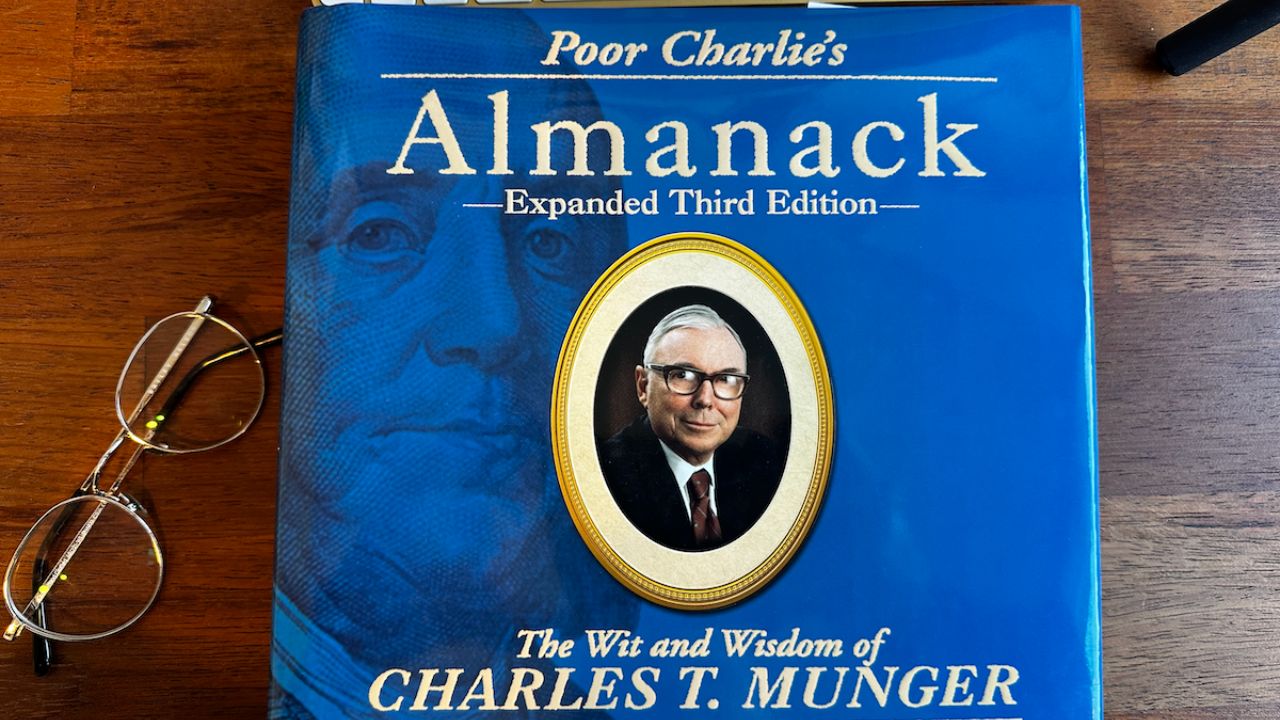
If you’re interested in going deeper into his philosophy for living a wonderful life and helping those around you, I’d implore you to read Poor Charlie’s Almanack (or listen to it – 5x times over to get the same benefit) or write notes as you try to comprehend The Value of Human Misjudgment.
In the meantime, here’s a simple guide to living a better life:
Family first. Charlie put his family first. So should you. Career, money, ambition. While they seem great (especially to people without kids), Charlie said that when he studied his family and ‘successful people’, he noted ‘they didn’t suffer by not getting further ahead’. Think about it.
Old fashioned values. As the Western world finds more and more reasons to challenge and criticise religion (Lord knows I do, too), what default values are you left with? Charlie was raised Christian and credited ‘old fashioned values’ with his family’s success. This is not to say ‘he was religious’. He wasn’t “religious” in that sense. In fact, he rallied against deep political and religious bias (he was intellectually fascinated by cults, for example). He frequently said ‘intense ideology cabbages the mind… and who wants a brain like a cabbage?’ Instead, it’s the principles that guide us, just as they do Australia’s laws and society.
Financial Independence. Early. Charlie worked for more than a dozen years as a lawyer, running his own firm. And he didn’t like it. In those years he said he earned $340,000 in total wages but somehow ended his time there with $300,000 saved up. Think about that! This money gave him the independence to make wonderful choices for the next ~50 years. Within 5-6 years, he turned that into $3-4 million, mostly from property investing. That in turn gave him the base to make incredible investments in public shares for himself and others.
“I didn’t want to get rich, I just wanted to get independent… and I overshot.”
Give a whole lot of things a wide birth. By this he means, avoid people with resentment, self-pity, strong political bias or envy. Even bitcoin and other emotionally charged decision-making. Figure out what you should avoid, then do so like the plague.
“One thing to avoid is intense ideology because it cabbages up the mind.” – Poor Charlie’s Almanack
(Obviously, intense ideology seems easiest to fall into when you’re young, inexperienced and impressionable. But he also went against those tendencies at all ages because it impacts older people in powerful ways that we don’t always realise. Over time, he repeatedly made the point that people adopt strong ideologies – like Greens supporters, Labor voters, One Nation or Liberals; or those who have strong views about medicine or science; or AI, etc. – when they’ve experienced an outlier event, like terminal illness, job loss and so on. Sometimes I think it’s important to imagine our lives as being unremarkable – we’re not the car crash victim, person who slips and falls then ends up on the news, the superhero or Jim Carey from the Truman Show.)
You have a moral duty to be reasonable. Charlie says this value is more important than being important (which is something our leaders should learn). Being reasonable is hard. Which is why Charlie dedicated his life’s work to it*. Being reasonable requires continuous learning from others, keeping an open mind, avoiding sin and envy; and building a foundation of values you know, care about and reflect on. Charlie built a latticework of mental models to analyse and learn from other disciplines like math, psychology, economics, biology and so on.
You should always be in a position to help others when they need you. What a wonderful lesson for a financial newsletter. You don’t need money solely for yourself. You need it to support those around you. Reframing your personal sacrifice for the betterment of others is a centuries-old tactic for living a richer life. Think about that the next time you’re cooking at home, versus eating out.
On luck: don’t overestimate your own brilliance, or that of others:
“You can be very deserving and very intelligent. Very disciplined. But there’s also a factor of luck that comes into this thing and people will get the good outcomes that seem extraordinary. For the people who have discipline and intelligence and good virtue, plus a hell of a lot of luck, why wouldn’t the world work like that? So you shouldn’t give credit for the unusual. A friend of mine said about a colleague of his, in his fraternity, he says, “old George was a duck sitting on a pond and they raised the level of a pond.” There are a lot of people who just walk into the right place and rise.”
***
That’s enough to think about for one week.
I’m now going to spend a day with my family. But did you know: you can track your net wealth with our updated tracker?
You can also create a vision board for your family’s future, then turn those ambitions into real financial goals.
And if you want financial advice, view our prices and book in a free discovery call this week.
Onward & upward,
Owen