
Many investors look for income rather than growth, and the ‘high yield’ exchange traded funds (ETFs) can look tempting. Here’s why I’d be cautious.
What is a high yield ETF?
High yield ETFs come in many shapes and sizes. A couple of examples include the Betashares Australian Top 20 Equity Yield Maximiser Fund (ASX: YMAX), the Vanguard Australian Shares High Yield ETF (ASX: VHY) and the Global X S&P 500 High Yield Low Volatility ETF (ASX: ZYUS).
All three are listed managed funds or active ETFs, where companies are selected based on yield and other criteria. This is a bit different to a passive ETF that just holds, say, the largest 200 companies on the ASX.
With active ETFs, you need to consider the rules that the ETF provider is using to select the companies it invests in.
For example, the YMAX ETF invests in the 20 largest companies on the ASX (known to be big, stable dividend payers).
The VHY ETF invests in the ASX companies with the highest yield forecasts. The ZYUS ETF takes a similar approach, but invests in US-listed companies and uses a volatility screen (removing the companies with the highest volatility).
You can see that all three ETFs have a similar goal, but approach it in slightly different ways.
So, what’s the issue?
On the face of it, there’s no issue with selecting and prioritising companies that pay a large dividend. It’s a logical approach for an investor that’s more focused on income than capital growth.
Naturally, the companies that pay large dividends are the bigger, more stable, and slower growing companies, so you wouldn’t expect to get much capital growth out of these ETFs.
However, what you should be looking for at the very least is to maintain your capital investment.
What you need to be wary of with some of these ‘high yield’ ETFs is the way that they present their performance.
Let’s look at YMAX
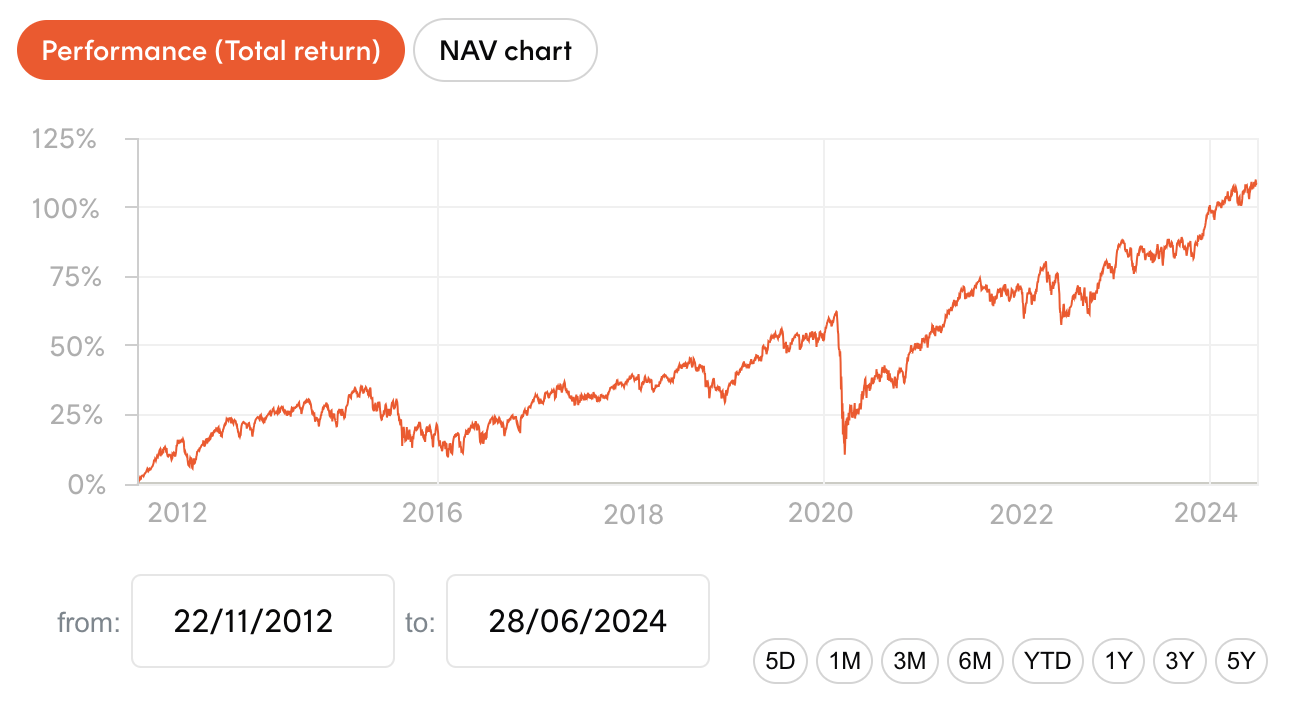
Over the last year YMAX has returned ~13.7%, and over the last 5 years it’s returned ~6.6% per year. The performance chart is a nice picture of strong growth over time.
And, more importantly for those looking for income, YMAX has a 12-month gross distribution yield of 9.7%!
That’s where I started to get concerned. Let’s take a look now at the net asset value (NAV) chart, which is essentially the share price.
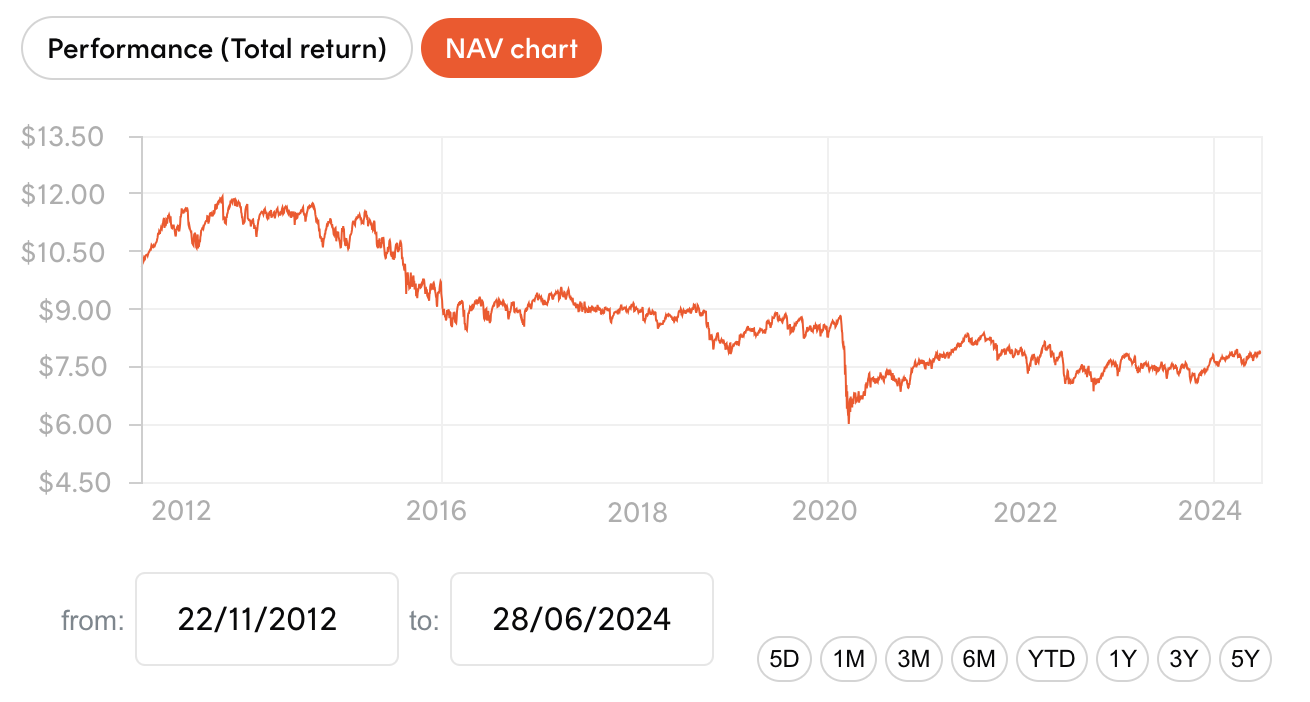
When we just look at the share price, we can see that over the long-term YMAX is consistently losing value. So, why does the performance table say the fund has returned 6.6% per year over 5 years?
It’s because the total return on the website assumes that all dividends are reinvested. This is standard industry practice so I don’t by any means blame Betashares for this, but it’s an issue with high yield ETFs.
If you’re investing in a high yield ETF, there’s a very good chance you intend to withdraw the dividends and actually use that income. And you can see from the two graphs above, if you’re withdrawing the dividends every year then your capital is actually shrinking over time (and pretty rapidly).
How is the yield so high?
It’s also worth mentioning how YMAX achieves a 12-month yield of over 9%, which is way more than most ASX companies pay. The YMAX ETF is selling call options on the shares in the portfolio (basically, this gives the buyer an option to buy the shares at a later date at a fixed price).
The idea is that YMAX collects a premium from selling these options and can then distribute these as additional income. This is also why, despite investing in ASX companies with mostly fully-franked dividends, the ETF distributions are only around 50% franked.
While this strategy can be effective in a declining market (where the call options won’t be exercised), it can reduce income and returns in a rapidly rising market.
If this is all sounding a bit complex, it’s because it kind of is. This is a complex product and probably not exactly what most investors are expecting when they think ‘high yield ETF’.
What I’d do instead
The other ETFs I mentioned earlier, VHY and ZYUS, are slightly simpler options.
Basically, if you look at historical returns, YMAX has delivered very high income but negative share price returns. ZYUS delivers a smaller (but still high) dividend and the share price has grown slightly over the last 5 years (only ~2.5% total).
And the VHY ETF delivers the smallest dividend yield (still higher than an ASX 200 yield) but the most capital growth over 5 years (while also charging the lowest management fee).
Which one you should pick depends on the trade-off you want to make between income and growth.
There are just two things to remember when you’re looking at high yield ETFs.
One, a high dividend yield shouldn’t be compensating for a loss of capital over time. And two, take the performance charts with a grain of salt because they often assume dividends are reinvested. Look at both historical distributions and share price movements separately.