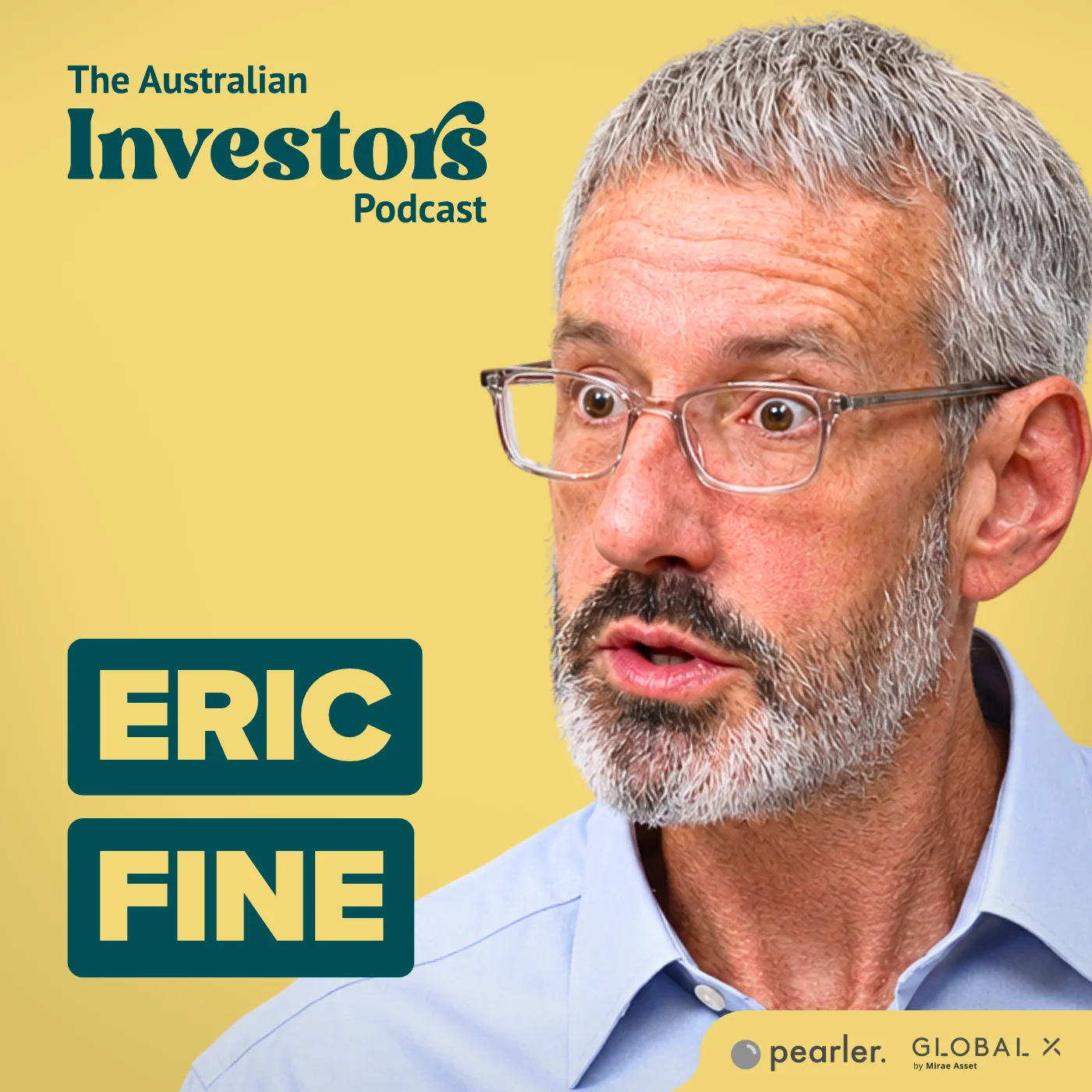
Are we still paying for the 2008 financial crisis—and could countries usually seen as safe face risks investors underestimate? On the Australian Investors Podcast, Owen Rask sits down with VanEck’s Eric Fine to explore what decades in global markets have taught him about money, debt and the limits of certainty.
Eric’s story begins with an upbringing across France, Switzerland and Thailand, where he first noticed that currencies and financial systems do not last forever. He recalls his move into investing and his work on early securities-clearing infrastructure in 1990s Russia, when paper vouchers were being turned into electronic records. It is a vivid lesson in the distance between designing a market and making it work.
The conversation then turns to the global financial crisis. Eric explains how his understanding of the banking system changed as details emerged after 2008, and why he believes the consequences of that period still matter. His idea of ‘fiscal dominance’ asks what happens when heavy government debt constrains a central bank’s ability to tackle inflation with higher interest rates.
Does that leave developed economies exposed in ways investors might overlook? Eric discusses differences between the United States, Australia, the UK, Japan and emerging markets, rather than treating any group of countries as uniformly safe or risky. He and Owen consider what these differences could mean for bond markets, inflation and long-term investing.
Above all, Eric makes the case for changing your mind when the evidence changes and thinking through unlikely but consequential scenarios before a crisis arrives. This is both the story of an unusual investing career and a challenge to assumptions about which markets are truly resilient.