
Small cap vs large cap investing is one of the oldest debates on the ASX and global stock markets, and the uncomfortable truth is that both sides are right, just at different times.
Does size really matter?
Is the most money to be made in small cap companies or large cap companies?
¿Por qué no los dos?

Investors constantly debate small caps vs. large caps and whether one provides greater returns. For every heroic growth story of the early investors in Pro Medicus Limited (ASX:PME) or Fortescue Ltd (ASX:FMG) there’s a litany of companies that have incinerated shareholder capital. Ultimately, small caps can deliver outsized returns, but only if you respect the cycles that drive performance.
What is a small cap company on the ASX?
There’s no single definition of a small cap on the ASX. Broadly speaking, small caps sit outside the ASX 100 and often have market capitalisations between roughly $300 million and $2 billion.
These businesses are typically earlier in their growth journey. They tend to trade with lower liquidity, meaning fewer shares change hands each day, and they’re often more sensitive to funding conditions. Many still rely on capital markets to fund expansion, which can involve equity raisings that dilute shareholders if growth doesn’t materialise as expected.
Why small cap shares can outperform
Small caps usually start with smaller revenue and profit bases. That means incremental improvements can have an outsized impact on earnings.
A single contract win, new customer, or operational improvement can materially lift profits. As revenue grows faster than costs, operating leverage kicks in, and margins can expand quickly. If execution is strong, investors may also be willing to pay a higher multiple for those earnings, leading to a share price re-rate.
This is where small caps can benefit from a double tailwind: earnings growth combined with valuation expansion. Smaller companies can also be more agile, whether that’s expanding into new markets, acquiring competitors, or becoming an acquisition target themselves.
Why small cap shares can underperform
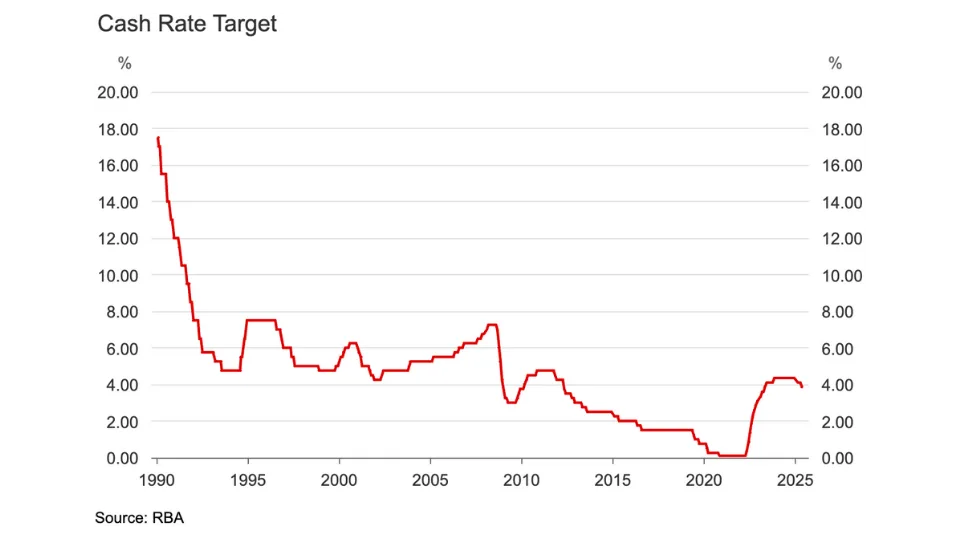
Small caps tend to suffer when capital is tight. Higher interest rates, risk-off sentiment, or credit stress can hit them harder because:
- they rely more on equity raises or debt facilities
- they have less diversified revenue bases
- one contract or customer matters more
- when sellers rush to the exit, liquidity can disappear fast
In these periods, large caps often look safer and attract capital simply because investors prioritise balance sheet strength and liquidity. If an investor can’t find anyone to buy their shares when they want to exit, it can lead to significant capital loss.
When large cap shares tend to outperform
Large caps usually outperform when investors pay up for certainty.
Large caps are more likely to have defensive earnings profiles with predictable earnings and guidance. There’s often much more coverage of these companies by analysts and investment funds, which gives investors more confidence. Unlike small caps, large caps tend to have much more liquidity and often provide a stable dividend. They also dominate index flows, which can become a persistent bid during risk-off regimes.
For many investors, a smoother ride with lower volatility is a worthwhile trade-off, even if long-term returns are less explosive.
How to invest without turning it into a religion
In my opinion, the best approach is not “small caps vs large caps,” but a portfolio role for each.
Large caps can provide an anchor for a satellite portfolio with liquidity and stability. Small caps can provide upside with disciplined position sizing.
Small caps can be extraordinary wealth creators, but they’re less forgiving. Your edge comes from process and under covered companies. As with all research, it comes down to understanding the business model, tracking execution, and avoiding portfolio blow-ups from position sizing errors.