

ASX dividend stocks promise income and franking credits, but some of the most popular names hide risks in plain sight.
For Australian investors, dividends are more than a bonus. They are a source of confidence, cash flow, and in many cases, financial independence. Regular income can smooth volatility, fund retirement, or simply make long-term investing easier to stick with.
The challenge is that not all dividends are created equal. High yields often look attractive on the surface, yet they can mask weakening businesses, stretched payout ratios, or cash flows under pressure.
Chasing income without understanding sustainability is one of the fastest ways to turn a sensible strategy into a costly mistake.
This is why investing in ASX dividend stocks requires more than screening for yield. It demands an understanding of business quality, cash flow discipline, balance sheet strength, and the role franking credits really play in after-tax returns.
Get this right, and dividends can become a powerful long-term ally. Get it wrong, and the traps are rarely obvious until it is too late.
Check out our course: How to invest for dividends and growth in ASX shares & Australian ETFs.
Start with dividend sustainability, not yield
A high yield always gets attention. Sometimes it deserves it. Often, it does not.
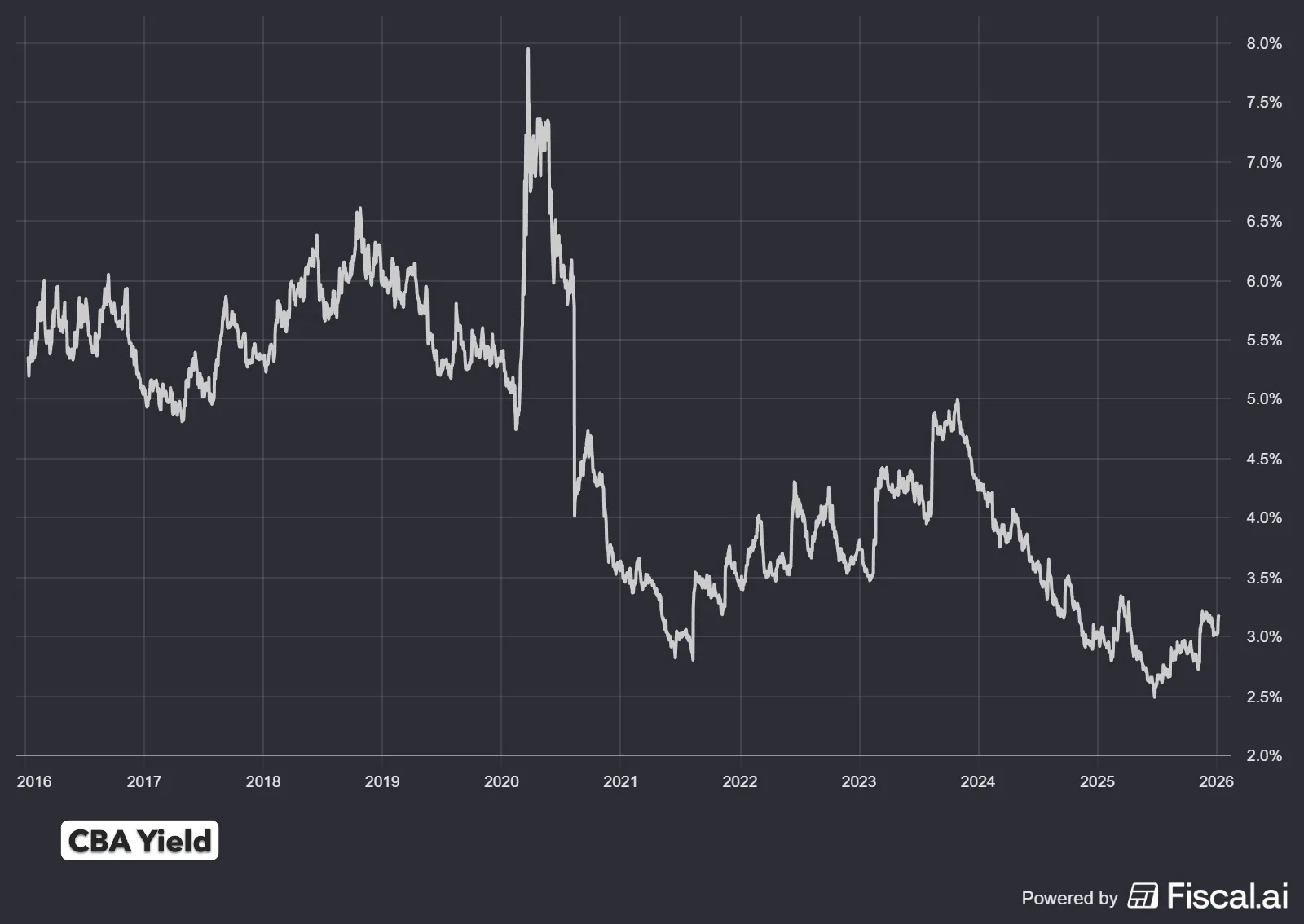
When a yield jumps, it is usually because something else has fallen, the share price. Markets rarely hand out free lunches. If a company is under pressure and investors are selling, the historic dividend yield can quickly become misleading. Yesterday’s payout may not survive tomorrow’s earnings downgrade.
This is how “income investing” quietly turns into a capital cash oven.
The most important question to ask is simple. Can this business keep paying its dividend through a downturn?
Key metrics to check in ASX dividend stocks
- Payout ratio
This shows how much of the earnings of the company are paid out as dividends. A very high payout ratio can be risky, particularly if earnings fluctuate due to factors outside the company’s control. Cyclical dividends can be great, but you need to accept variability ,and as a rule, you want a buffer. - Cash flow coverage
Companies pay dividends in cash, not the profit number on your P&L. Check whether operating cash flow covers most of the dividend. If cash flow is week, a company may be funding dividends with debt or asset sales. - Balance sheet strength
High debts can reduce a company’s flexibility. Rising interest costs can squeeze future dividends. Strong balance sheets tend to support steadier income.
Australian investors (particularly retirees with a 0% tax rate) are obsessed with dividends (and franking credits), and some companies will prioritise dividends (and therefore share price) over cash-flow sanity. Keep an eye on this.
Franking credits Australia’s quiet advantage
Franking credits are as Aussie as a lamington, Vegemite or the baggy green cap!
It’s a unique advantage for Australian investors. Franking credits are attached to franked dividends; they essentially represent a tax credit for tax already paid by the company, avoiding double taxation for shareholders.
Not all ASX dividend stocks are created equal. A company like Ansell Limited (ASX: ANN) offer unfranked dividends with no attached credits. This happens when a company pays little or no tax in Australia. You can also receive partially franked dividends from companies with Australian and international profits, such as Macquarie Group Ltd (ASX: MQG).
The common dividend traps
So far, we’ve covered a few key pitfalls of investing in ASX dividend stocks. Some of the common dividend traps are:
- Yield chasing: the classic mistake. Investors buying the highest yield on the screen without understanding why it’s high. In many cases, the yield is elevated because the share price has fallen on deteriorating fundamentals. In simple terms, if the company can’t grow or sustain earnings, there’s a higher probability of a dividend cut.
- One-off dividends: These can mislead investors who extrapolate the past payment into the future. Special dividends often arise from asset sales, unusually strong commodity cycles, or temporary capital events. These are great when they happen, but they are not a reliable source of ongoing income.
- The ex-dividend whipsaw: When a company goes ex-dividend, the share price will often adjust downward by the dividend amount, reflecting that the dividend is no longer available to new shareholders post the ex-dividend date (the day you must have held shares to be eligible for the dividend). Some investors buy just before the ex-dividend date to “capture” the dividend and then sell straight after. Add brokerage fees, spreads, and market noise, the trade can leave you worse off.
- Concentration risk: Not the most obvious threat, but often, sectors can provide strong dividend yields. For example, Australia’s big 4 banks provide generous dividends and are long-time favourite ASX dividend stocks. Building a dividend portfolio that’s effectively a bet on one sector, purely because yields look attractive, can be dangerous. While it can work for a period, it exposes you to sector-specific shocks (credit losses, regulatory changes, higher funding costs) and reduces diversification when you need it most.
What to consider when investing in ASX dividend stocks
In my mind, investing in a company with a strong dividend starts with a durable business model, rather than just a high yield.
One that can defend its margins and demand throughout the cycle, provide consistent cash generation, with a conservative payout ratio. This leaves a buffer for reinvestment, downturns, unexpected costs and any debt repayment. A dividend that consumes nearly all earnings leaves little room for error and often forces management into uncomfortable trade-offs.
Approached in the right way, dividends are an excellent way to add income to your portfolio.