
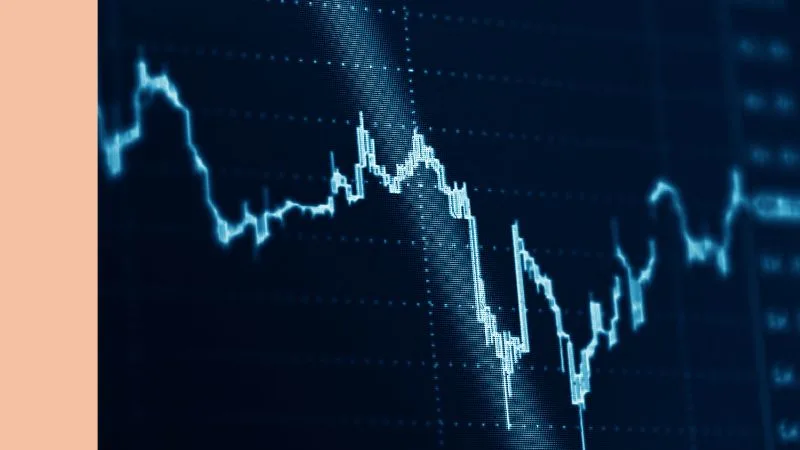
US markets declined overnight as Trump left the G7 early to focus on the escalating conflict between Iran and Israel. US naval ships are poised and British ships have been arriving as well. We have seen a pullback in markets since Israel hit Iran, overnight the S&P 500 and Nasdaq declined 0.84% and 0.9% respectively.
Lost in the bigger geopolitical news was soft US consumer spending. This is very much in line with the “slimming” of the US consumer Mark Kiesel from Pimco mentioned when we chatted a few months ago.
- S&P 500 = -0.84%
- Nasdaq = -0.90%
- Aussie dollar up 0.7% to 64.76 US cents
- Iron down 1.2% to $92.90 US a tonne
There’s an index for everything
It is natural for people to ask the question, “what does this mean for the stock market” when faced with any event causing uncertainty. And when it comes to the stock market, if it can be measured, someone will come up with an index for it.
Enter the Geopolitical Risk Index. Created by Dario Caldara and Matteo Iacoviello, their work tracks geopolitical events as measured across the number of articles in ten newspapers and tracks the market returns following those events. The modern index starts in 1980, and a historical index – which tracks the number of articles across three newspapers – starts in 1900.
Their work finds in the twelve months following a spike in geopolitical conflict, the median market return (as usual the market referred to is the US and in particular S&P 500) was 22.6%.
This follows a fairly common trend. Markets will decline in short term as they digest the economic uncertainty, but then continue the forward march promptly after.
Be confident in your plan and avoid temptation
This conflict is yet another timely reminder that as an investor you will be faced with numerous tests every year. The exact test, in the context of your portfolio, is practically irrelevant, we just know they will happen.
This is why it is important to have a plan. As investors at Rask, we do not plan for a specific future, we plan for any future.
We are diversified across asset classes and within asset classes, and each of our seven portfolios has a blend of growth and defensive elements depending on its time horizon. This diversification and the north star of a goal for each portfolio will see us move forward from one event to the next.
What you will never hear us say is, “how do we play (uncertain event name)“. This sentence is a distraction and we will leave this up to the brokers, journo’s and general talking heads who are paid in clicks rather than long-term performance.
That sentence steals your attention and at best wastes your time. At worst, it can interrupt your plan, have you chasing returns and cause a cascading effect of investor behavioural issues.
Giving into temptation…just make sure you measure it
If you simply can’t help yourself and you know yourself, you should have had this mapped out in your plan.
For instance, you may have a 10% satellite allocation where you allow yourself the ability to invest a small portion of your portfolio in thematic ETFs and stocks. An adequate portion so you can scratch the itch without derailing your good work.
If you are going to give into temptation, make sure you measure it. Every dollar in your portfolio should have a job. Each dollar you allocate away from your steady, boring compounding is potentially multiple dollars lost in the future. So, if you are going to divert capital away from that, make sure you know if it adds or detracts.
Navarre at Navexa has developed a great tool for tracking your satellite components. You simply tag holdings in your current portfolio and group them into a satellite component. You can even add a benchmark to that group of stocks/ETFs/funds etc.
Don’t be that gambler who only talks about their wins. If you do want to use Navexa, make sure you enter the coupon code RASK20 to get 20% off.
“It’s too volatile…I’ll just wait for a bit”
Final thought, the one thing I don’t want to hear prospective investors say is “it’s too volatile” or “it’s too uncertain”. I find myself saying this several times a year, I’ve never known a period where it hasn’t been uncertain.
If you wait for the perfect time, you will never invest. Also, if you are predisposed to thinking like this, when the perfect time does come along – when the market is getting crunched – you won’t want to invest.
Control what is within your control and as you keep learning about the history of the market, you will become more comfortable. You’ll also see the patterns tend to repeat and eventually the chart continues from the bottom left corner towards the top right.
If you would like to talk about investing with me, you can reach me via the chat in the bottom right hand corner. Please use it, I promise I will respond.