
Economists at Westpac Banking Corp (ASX: WBC) don’t have good news for borrowers. They’re expecting three more RBA rate rises this year.
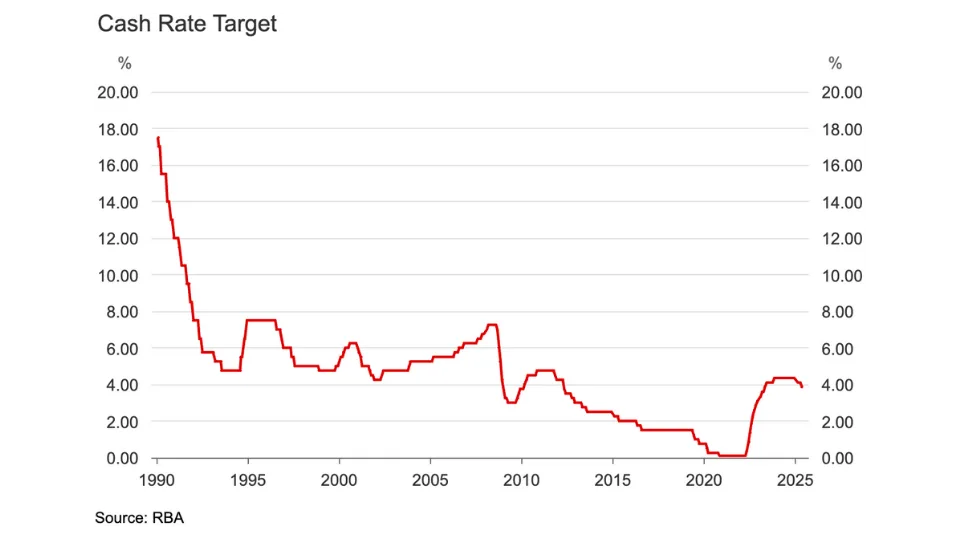
The Reserve Bank of Australia (RBA) has already raised rates twice this year and now there are predictions from Westpac that we could see multiple rate rises over the next several months.
Why is Westpac so pessimistic about the RBA interest rate?
Economists from the bank now think that Australia’s central bank could rise by 0.25% in May, June and August, with the peak cash rate to reach 4.85%.
Westpac’s economist team said that the shift reflected the longer disruption to the fuel supply, with an expectation that there’s going to be a slower recovery.
The bank highlighted that the Strait of Hormuz remains virtually shut, which is driving up fuel and other oil-derived product prices, in turn raising prices for other goods.
Westpac’s economists believe that the RBA will respond to this pricing behaviour by tightening monetary policy by more than would have been needed before the inflation pass-through of costs.
The economists suggested that the higher cash rate will weigh on Australia’s economic outlook and growth will be slower, especially consumption, while the labour market will be softer.
It’s expecting the unemployment rate to peak around 5%, higher than previous expectation of 4.7%.
Westpac suggested that headline inflation will go below 2.5% by mid-2027. But, the economists think that the RBA will be slow to reverse this policy tightening.
The bank is expecting four rate cuts in 2028, one in February, one in May, August and November 2028.
What about the halving of fuel excise?
The Australian government has announced that it’s going to halve the fuel excise, which may help headline inflation and reduce costs for drivers.
Despite that, the economists still think that CPI inflation will likely still peak at 5.4% the June quarter.
This announcement does not affect prices of other oil-related products, including aviation fuel and various plastic.
Final thoughts on the Westpac RBA rate predictions
It’s surprising how quickly conditions have changed for the central bank to deal with.
One of the problems is that Australia was entering this period with stronger-than-desired inflation.
Either way, I think there are a wide array of ASX dividend shares and ASX growth that are now trading at much better value and are worth buying at the much cheaper prices we’re seeing.