
As 2026 gets underway for investors, global share markets remain resilient, even as uncertainty stacks up in the background.
Equities are still trading near historic highs. Corporate earnings broadly held up over 2025. Artificial intelligence continues to dominate the productivity narrative. Yet the geopolitical backdrop feels more fragile than it has in years.
The US is increasingly assertive on the global stage, from renewed involvement in Venezuela’s political direction to it’s increasingly public strategic interest in Greenland. Meanwhile, wars, inflation, and interest rates continue to provide plenty of fodder for catchy headlines.
In moments like this, markets rarely send clean signals. But long-term investors often learn more by watching behaviour than Bloomberg.
That is why many investors continue to study the actions of Warren Buffett (and now his successor, Greg Abel), as he approached the twilight of an investing career unlike any other.
Berkshire’s growing cash pile is not a prediction
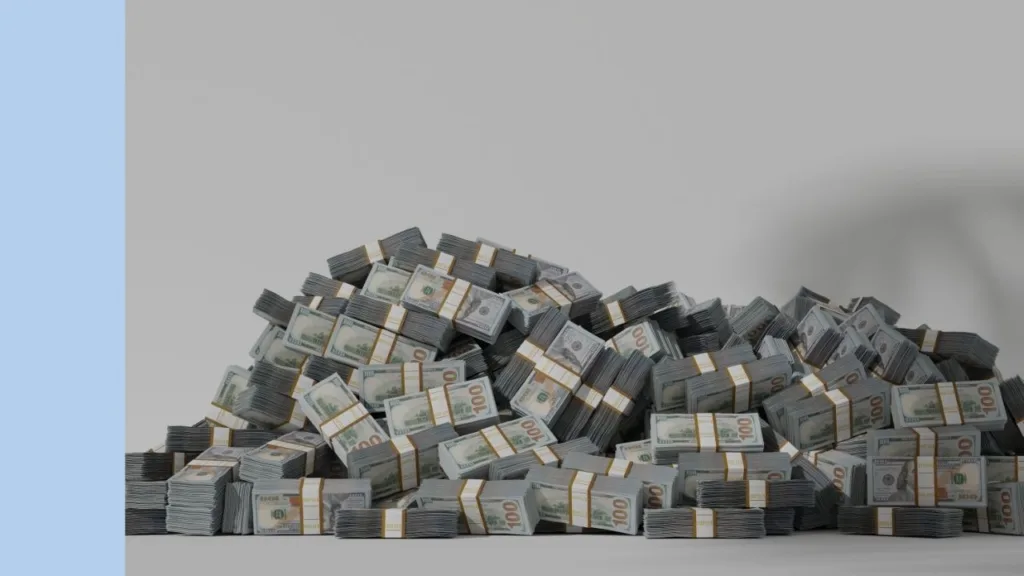
One of the most discussed features of Berkshire Hathaway (NYSE: BRK.A) (NYSE: BRK.B) in recent years has been its expanding cash balance.
At Berkshire, the most obvious signal has been restraint. Berkshire’s cash balance has continued to grow, even as markets have rallied and enthusiasm around themes like AI, defence, and energy transition has intensified.
Over the past few years, global equity returns have become increasingly concentrated in a handful of mega-cap technology businesses, often referred to as the “Magnificent Seven”. For an investor of Berkshire’s size, that concentration has not created an easy shopping environment.
That context helps explain Berkshire’s recent portfolio adjustments. The company added a relatively small position in Alphabet (NASDAQ: GOOG), while at the same time trimming its long-held and highly concentrated position in Apple (NASDAQ: AAPL). These moves do not signal a loss of conviction in quality businesses. Rather, they reflect portfolio management at scale, balancing concentration, valuation, and future flexibility.
There is also a longer-term consideration at play. With Greg Abel set to lead Berkshire into its next chapter, many observers believe Buffett is intentionally creating room for the portfolio to evolve. Reducing concentration and building liquidity gives Berkshire’s next generation of leadership the ability to deploy capital on their own terms, in their own era.
Seen through that lens, the growing cash balance looks less like caution and more like preparation.
Size changes the opportunity set
One nuance often missed in discussions about Buffett’s caution is scale.
Berkshire Hathaway now operates on a level few investors can truly relate to. Even a multi-billion-dollar investment barely registers. Buffett is not choosing between dozens of attractive ideas. He is looking for rare, exceptional businesses that can absorb tens of billions of dollars and still compound at attractive rates for decades.
For everyday investors, particularly those focused on the ASX, this distinction is critical. What looks “fully priced” at the mega-cap global level can still leave room for opportunity in smaller, well-run Australian businesses with clear growth runways, pricing power, or structural tailwinds.
Context matters. Buffett’s restraint does not invalidate all opportunities. It simply reflects his constraints.
Think like a business owner, not a trader
One of Buffett’s most enduring lessons has nothing to do with macroeconomics at all.
He encourages investors to think like business owners. To focus on how a company makes money, how defensible its position is, and whether management allocates capital sensibly over time. These questions matter just as much on the ASX as they do on Wall Street.
When investors fixate on geopolitics, rate predictions, or short-term market moves, they risk losing sight of what actually drives long-term returns: earnings growth, returns on capital, and disciplined reinvestment. A business with strong fundamentals can navigate many external shocks. A weak one rarely survives them.
This is where information diets matter. Staying informed is useful. Constantly reacting is not.
Lessons that still matter for everyday investors
While most investors do not face Berkshire’s scale issues, Buffett’s behaviour still offers useful perspective.
First, process matters more than prediction.
Buffett’s approach has evolved over decades, but the foundation remains consistent: understand the business, demand durability, and insist on sensible prices. Copying positions matters far less than committing to a process you can repeat through different market conditions.
Second, patience is not pessimism.
Doing nothing is often the hardest decision in investing. Buffett has long shown that waiting for the right opportunity is a strategy, not a failure. There is no requirement to be fully invested at all times.
Third, long-term conviction still underpins everything.
Despite today’s caution, Buffett has never lost faith in productive businesses as long-term wealth builders. Innovation continues. Productivity compounds. Over time, well-run companies tend to reflect that progress.
A steadier lens for Raskals in 2026
As 2026 unfolds, investors will face no shortage of noise.
Markets will digest geopolitics, policy shifts, and technological change. Predictions will be loud. Certainty will be scarce. In that environment, Buffett’s behaviour offers a quieter but more durable message.
Stay disciplined. Focus on businesses, not headlines. Avoid letting your information diet overwhelm your decision-making. And remember that long-term investing has always rewarded clarity, patience, and perspective.
That lesson feels just as relevant today as it did decades ago.
ut the principles that built one of history’s greatest investing records remain steady.
For long-term investors, that may be the most valuable signal of all