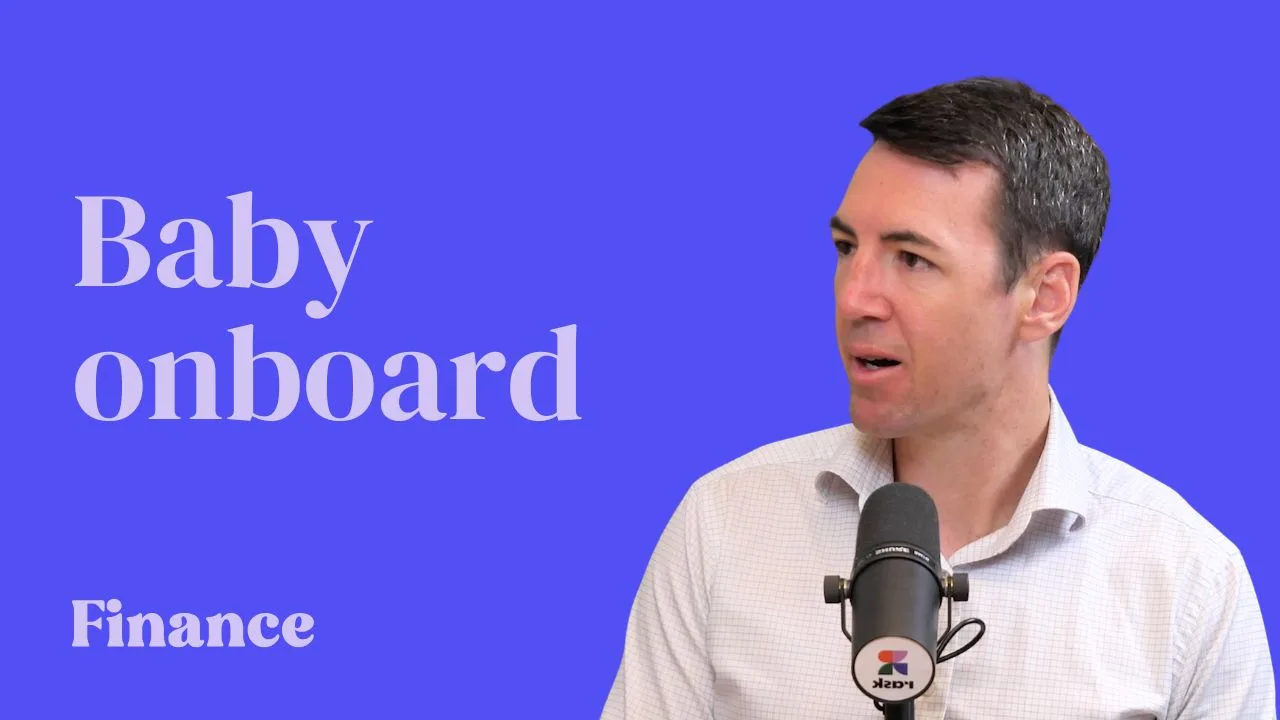

In this Australian Finance Podcast episode, Owen Rask is joined by Alex Luck, financial adviser and co-founder of Everest Wealth Group, for a deep dive into financially preparing for kids.
Alex works with many Australians in their 20s to 40s navigating career progression, property decisions and starting families. As a father of two himself, he shares both professional and personal insights into what really matters.
This episode covers:
- Planning maternity and paternity leave
- Understanding Centrelink entitlements
- Modelling cash flow during parental leave
- Childcare costs and subsidies
- Property decisions before and after kids
- Insurance and wills
- The psychology of financial independence within couples
If you’re expecting, thinking about your second child, or simply planning ahead, this episode is essential listening.
Setting the scene: what changes financially when kids arrive?
Alex describes the biggest financial shift simply:
Most couples go from two full-time incomes to roughly “one and a half” incomes — at least for a period of time.
At the same time:
- Living expenses rise
- Childcare costs are introduced
- Borrowing capacity may reduce
- Psychological stress increases
The key theme throughout the episode is planning. The more you can control and prepare for in advance, the less financial stress you’ll experience during an already demanding life stage.
Step 1: Know your numbers
Before making decisions, couples should understand:
- Current cash flow (income vs expenses)
- Expected maternity/paternity leave entitlements
- Government parental leave payments
- Likely duration of reduced income
- Projected childcare costs
- Buffer requirements
Alex emphasises modelling different scenarios:
- 6 months off work
- 12 months off work
- Returning 3, 4 or 5 days per week
The aim is to see the impact before it happens — not after.
Government entitlements: what to understand
Centrelink Paid Parental Leave currently provides around 24 weeks of payments (rising to 26 weeks from July), paid at the minimum wage.
Eligibility is based on:
- An individual income test (around $180,000)
- A combined household income test (around $370,000+)
Importantly:
- Payments are typically processed via your employer
- Payments are taxable income
- The leave block can often be shared between parents
Many couples misunderstand how this works — especially sequencing employer leave and government payments.
Childcare subsidies
Childcare is one of the biggest financial shocks for new parents.
Subsidy eligibility depends on household income. Higher-income households may receive limited or no subsidy, resulting in out-of-pocket childcare costs of $20,000 to $50,000 per year in some cases.
Alex stresses:
- Apply early
- Confirm your subsidy is processed correctly
- Model childcare costs before returning to work
Many parents underestimate the financial and emotional impact of childcare decisions.
Property: buy before kids?
A major strategic question discussed:
Should couples buy property before having kids?
Key considerations:
- Two full-time incomes = higher borrowing capacity
- Having a dependent reduces borrowing capacity
- After kids, one income often reduces temporarily
Alex models this with clients:
- Can you afford the mortgage once one income drops?
- Do you need to build a larger buffer first?
- Would delaying purchase push buying power out 3–5 years?
Beyond numbers, stability becomes more important once children arrive. Many parents value long-term housing security more after kids than before.
Cash buffers
There are two buffers to consider:
1. Emergency fund
Typically 3–6 months of expenses — though some clients prefer much more for peace of mind.
2. Maternity/paternity gap buffer
If modelling shows a $20,000 deficit during the first year, build that in advance.
The earlier couples plan, the easier it is to accumulate this buffer.
Insurance: protecting the family
Once you have dependents, insurance becomes critical.
Key covers discussed:
- Life insurance
- Total and Permanent Disability (TPD)
- Income protection
- Trauma / critical illness
Important insights:
- Both partners may need cover — not just the higher income earner
- Replacing the primary caregiver is expensive
- Insurance is cheapest and easiest to obtain when young and healthy
Many people delay insurance until after a health issue arises — which can result in exclusions or higher premiums.
Wills and estate planning
A will is essential once children are involved.
Even a basic will is significantly better than none.
It ensures:
- Clear asset distribution
- Guardianship clarity
- Reduced legal stress for surviving partners
Financial independence within couples
One of the most important insights from the episode:
When one partner reduces income, they can lose financial independence.
Without proper planning, this can create:
- Psychological stress
- Unequal power dynamics
- Financial insecurity
Alex encourages:
- Transparent joint cash flow systems
- Equitable structures
- Open communication
Financial planning for kids is not just about numbers — it’s about partnership.
Practical tips discussed
- Invest in quality second-hand baby gear
- Avoid overspending on short-term items
- Understand employer leave policies thoroughly
- Consider superannuation splitting during parental leave
- Think about long-term career impact
Final takeaway
The core message:
The earlier you plan, the easier it is.
Kids are a massive life change — financially and emotionally. But with preparation, clear modelling and structured planning, families can reduce stress and protect long-term wealth.