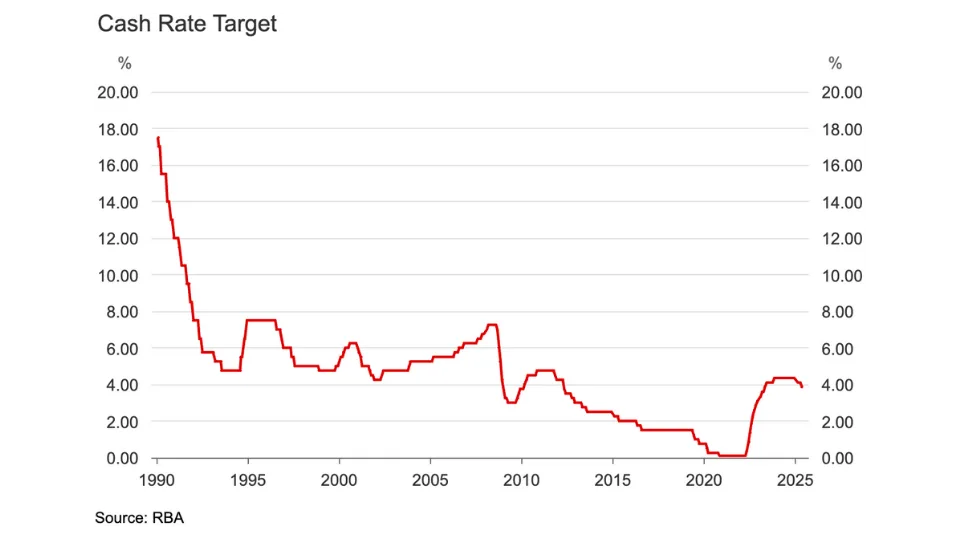


If you only look at headline index returns, 2025 appears fairly straightforward.
The All Ordinaries Accumulation Index returned just over 10% for the year, while the MSCI World Index rose around 20%. Both sit modestly above long-term equity averages of roughly 7–8% per annum. On the surface, it looks like a solid, if unspectacular, year for markets.
Beneath the surface, however, 2025 was anything but simple.
Australian equities were among the weaker performers globally. While enthusiasm around artificial intelligence helped the tech-heavy Nasdaq rise about 20%, comfortably ahead of the broader S&P 500’s 16% gain, European markets delivered some of the strongest returns. Italy’s FTSE MIB climbed 32%, Spain’s IBEX 35 rose 49%, and Greece’s ASE Index surged 44%.
Source: Bloomberg
Even within individual markets, dispersion defined the year. The gap between winners and losers was unusually wide, and this applied as much to large companies as it did to smaller ones. In Australia, investors in well-known names such as CSL (ASX: CSL), Commonwealth Bank (ASX: CBA), and James Hardie (ASX: JHX) were reminded that size alone offers little protection when things go wrong.
For the first time in many years, the Small Ordinaries Index, up almost 25%, comfortably outperformed the All Ordinaries. Mining stocks, particularly those linked to gold, drove much of this performance, with the ASX Small Ordinaries Resources Index rising around 70%. Even within the Nasdaq 100, 20 stocks fell more than 10% over the year.
Dispersion has always been a feature of markets. Without it, active investors would struggle to add value. A key part of Forager’s investment process involves identifying companies that are out of favour and assessing whether they could one day regain investor confidence. As Benjamin Graham famously quoted nearly a century ago in Security Analysis:
“Many shall be restored that now are fallen, and many shall fall that are now in honour.”
What feels different today is the intensity of these waves of popularity. Structural forces appear to be amplifying momentum-driven behaviour across markets. Investors looking to express themes such as European defence spending have been able to do so easily through listed vehicles, some of which delivered strong gains during 2025.
Missing these waves can be frustrating, and being caught on the wrong side even more so. For patient, long-term investors, however, periods of extreme sentiment often create opportunities. Unloved assets can offer fertile ground for new ideas, particularly if sentiment eventually shifts.
Some waves caught in 2025
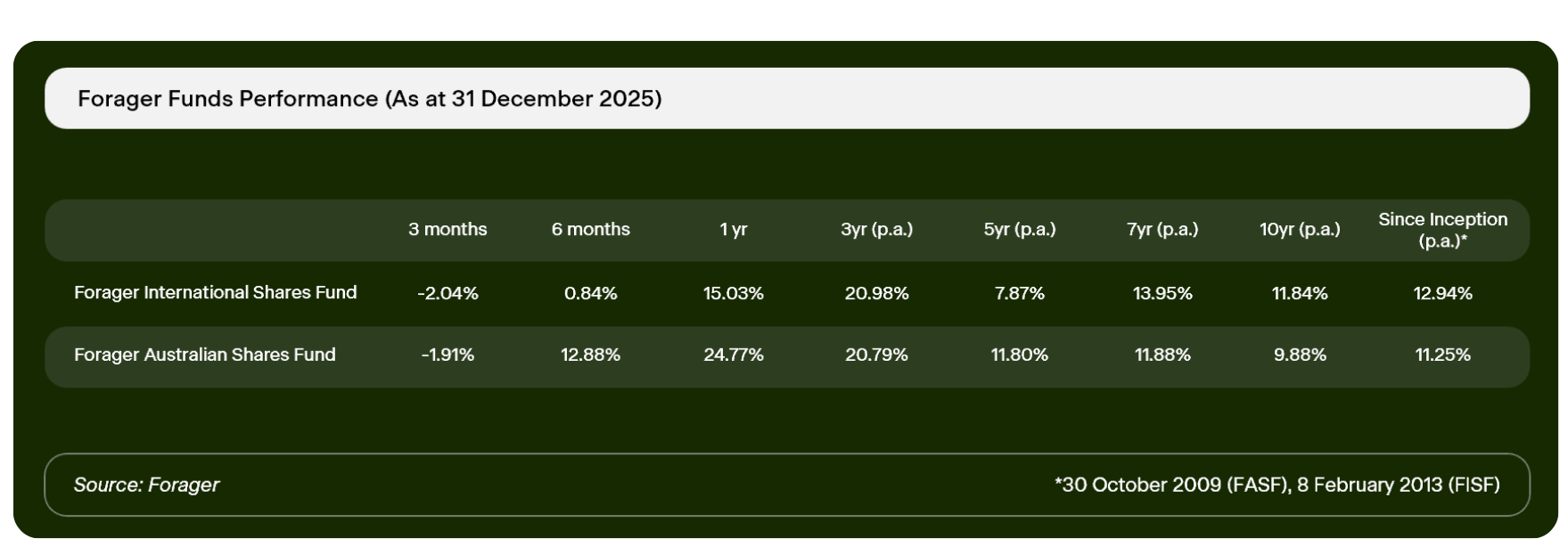
With concentrated portfolios and exposure to smaller companies, returns inevitably carry a strong idiosyncratic element. In 2025, the largest contributor to the Forager International Fund’s 15% return was US hospital owner Nutex Health, whose share price rose 420% despite broader weakness in the healthcare sector. Cuscal was the second-largest contributor to the Australian Fund, even as the global payments sector struggled.
The portfolios also benefited from several broader themes. Strong demand for data centres and power generation tied to AI investment supported large gains for companies such as Comfort Systems and NextPower in the International Fund. Meanwhile, a broad rally in technology shares during the first nine months of the year drove strong returns from previously out-of-favour ASX-listed technology companies, including Bravura and Catapult. Both were added to S&P/ASX indices during the year, further supporting their share prices.
The overall result was healthy gains for both funds, despite significant parts of the market, and parts of the portfolios, failing to perform.
Past performance is not indicative of future performance.
Where investors might look in 2026
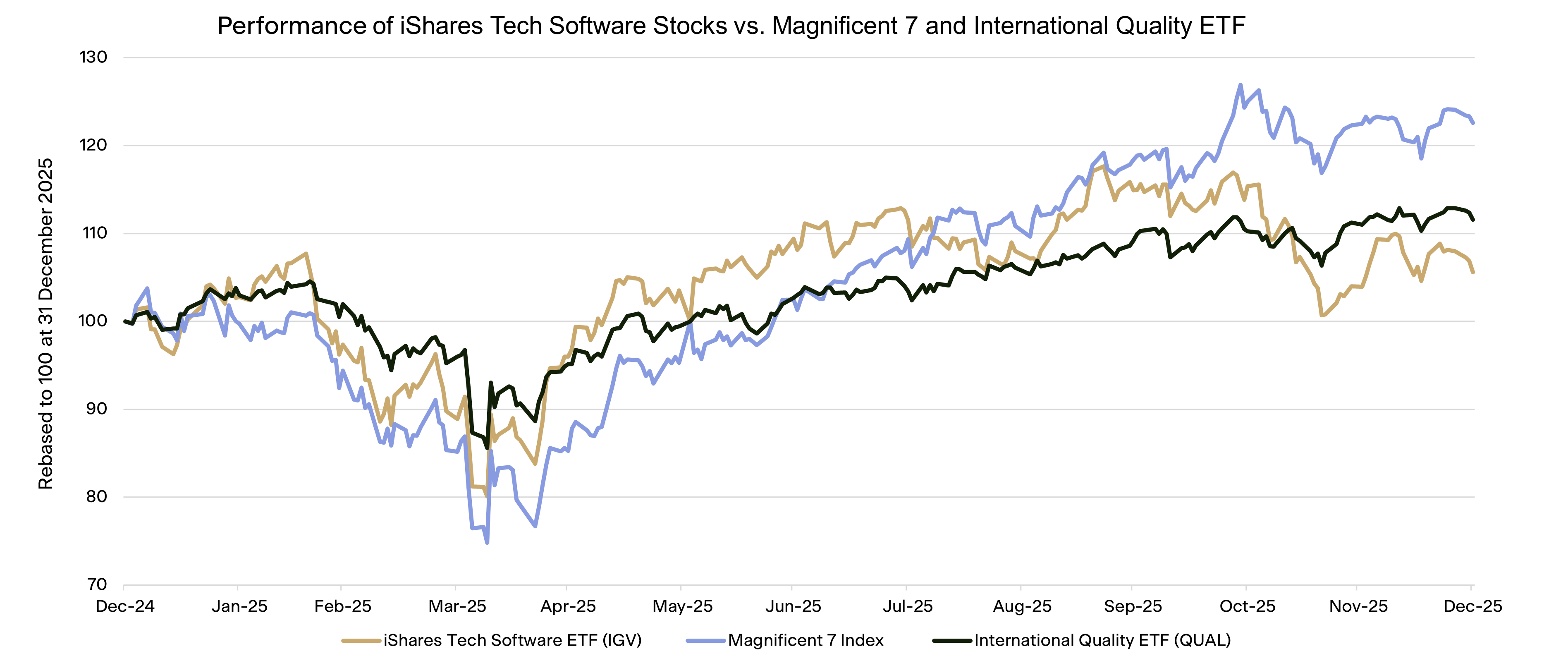
Looking ahead, it often makes sense to start close to home. During 2025, several favoured sectors became crowded. Profits were taken in some Australian technology holdings, which later experienced sharp pullbacks. Over the final quarter of the year, Catapult (ASX: CAT) fell 40%, Bravura (ASX: BVS) declined 27% from its October high, and even market favourite Xero (ASX: XRO) dropped 41% from its June peak.
Some of these businesses are now viewed as potential losers in an AI-driven world, based on the idea that software development is becoming easier and cheaper. That is one interpretation.
At the right price, it is also a view some investors are prepared to challenge. Software businesses often derive value not just from features, but from security, reliability, and ongoing investment. Despite recent declines, many of these stocks remain meaningfully higher over the year and, in some cases, still appear expensive. While limited capital has been deployed into Australian technology stocks so far, valuations are notably more attractive than they were just a few months ago.
When “quality” falls out of favour
Businesses with strong competitive positions, long earnings histories, and capable management teams have dominated investment narratives for much of the past decade. In 2025, many of these companies underperformed. Australian investors in names such as Carsales, ResMed, Cochlear, and CSL experienced similar outcomes to holders of global peers like Rightmove and Novo Nordisk.
In many cases, share prices had risen faster than earnings. The result was elevated valuations that proved vulnerable. Some companies saw years of flat returns as earnings caught up, while others experienced sharp deratings when expectations shifted. This dynamic affected several long-held investments during the year.
For Forager, quality is an important input into valuation rather than a standalone strategy. The flexibility to invest across a range of business types, while managing risk at the portfolio level, has at times allowed lower-quality holdings to generate strong returns. That same flexibility may help uncover opportunities among higher-quality businesses at more attractive prices in 2026.
Australian tourism, finally?
After several difficult years, Australian tourism may be approaching a turning point. International arrivals have reached post-Covid records, with August, September, and October arrivals collectively reaching 97% of 2019 levels.
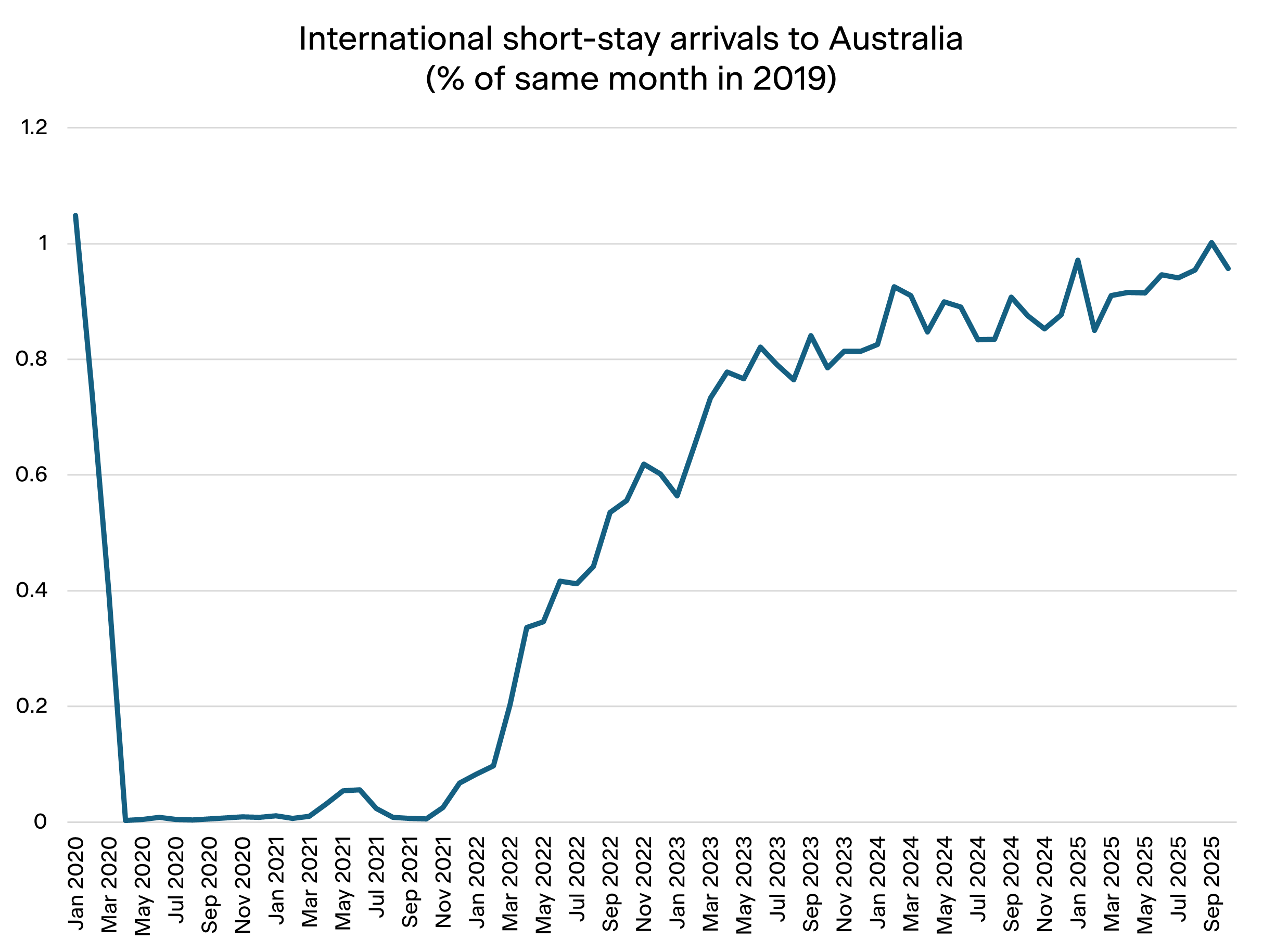
Source: Australian Bureau of Statistics
While the sector includes relatively few high-quality businesses, conditions continue to improve. Travel demand has historically grown faster than GDP, and there remains scope for further recovery. Share prices of some ASX-listed tourism companies remain near 2022 levels, despite improving fundamentals.
A backdrop that may improve
Active investing is rarely smooth. Investors will exit positions too early, hold others for too long, and sometimes wait years for opportunities to emerge. Yet the broader conditions that create opportunity for active strategies remain in place.
Since 2015, global capital flows have favoured passive investing, with around US$3 trillion leaving active strategies and US$6 trillion moving into passive vehicles. In Australia, several active managers closed during 2025. For those able to maintain long-term capital and discipline, this environment continues to present opportunities that may persist well beyond 2026.
If you want to check out the original article, access it here on Forager Funds Management’s website.